Why Family Responsibilities Can Help Children Feel Happier and More Connected
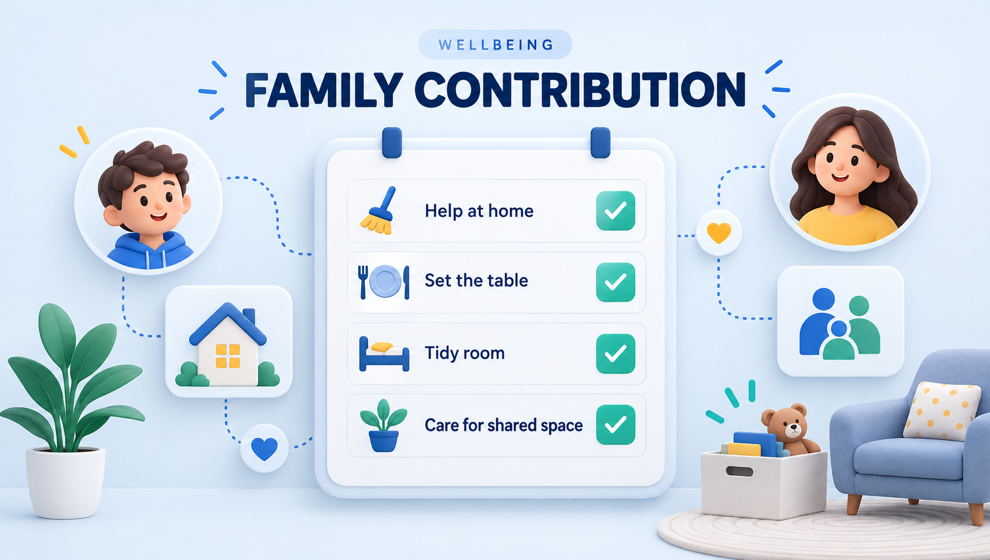
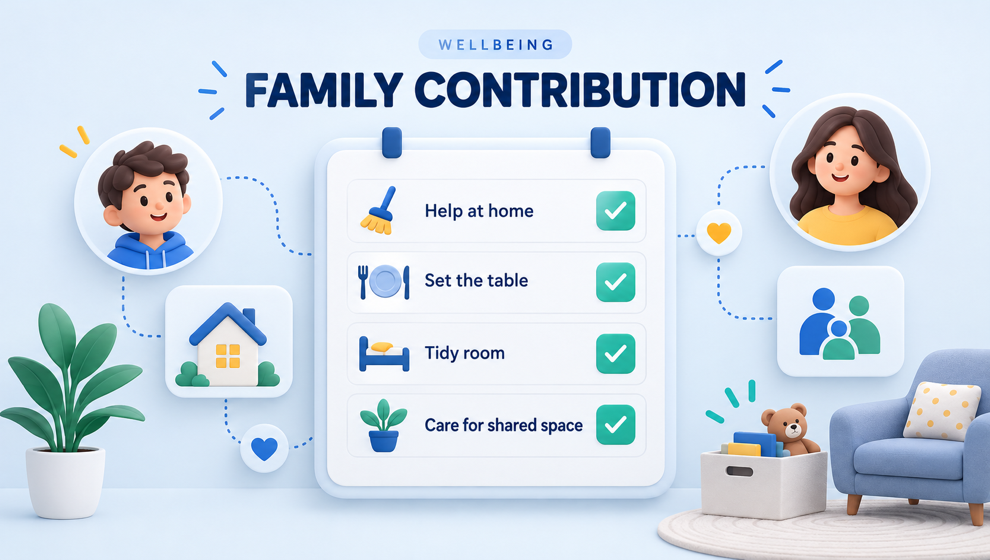
Every family has recurring tasks: putting toys away, setting the table, feeding a pet, helping with groceries, or preparing things for the next day.
Household responsibilities are sometimes treated only as a list of things a child “has to” do. But they have another side. When children contribute to family life, they gain a sense of belonging and learn that their actions matter.
This does not mean chores automatically make every child happy. Tasks should be age-appropriate, fairly shared, and never become an excessive burden. But regular, manageable participation can support competence, independence, and connection.
Helping creates a sense of significance
Children benefit from seeing that their actions have a real result. When they set the table, dinner can start more easily. When they put their things away, the morning can be calmer. When they help tidy a shared room, the space becomes better for everyone.
Research has linked regular chores in childhood with stronger perceptions of competence, social confidence, and life satisfaction. This is an association, not a guarantee for every child.
Responsibilities build independence
Small tasks give children a safe place to practice remembering, planning, following through, noticing results, correcting mistakes, and asking for help. Over time, these experiences can become a useful feeling: “I can handle things.”
A family becomes a team
Responsibilities work best when they are presented as a shared contribution rather than a punishment. “Everyone has a role in making home work well” creates a different message from “you have to do this because you are a child.”
Children should not carry an adult load, but they can participate in ways that fit their age. Parents remain part of the same system, showing that care, planning, and household work are shared responsibilities.
Keep the load fair and flexible
Tasks should be clear, limited, age-appropriate, shared across family members, and stable enough to become familiar. Avoid using chores to measure a child’s worth or comparing siblings. If a child is tired, ill, or going through a difficult period, reduce the list temporarily.
An honest family system values support and flexibility more than perfect execution.
Make responsibilities visible
A shared list can show what needs to be done, who owns it, when it is due, what is complete, and where help is needed. This reduces invisible reminders held by one parent and gives children a clearer picture of how they can contribute.
Shareday brings family tasks, events, shopping, and agreements into one shared space. When everyone’s contribution is visible, it becomes easier to distribute the load, notice help, and support one another.
Household responsibilities are not only about order. When handled thoughtfully, they can help children feel: “I matter to my family. I can help. I belong to this team.”
The connection between chores and wellbeing does not mean chores treat anxiety or other mental health conditions. Outcomes depend on age, workload, relationships, and the way tasks are assigned. Sources: PubMed and UNICEF.